This post may contain affiliate links.
The Disappearance of Georgianna Darcy
by Regina Jeffers - I wanted to like this book more than I did, and it started out with promise. The author, Regina Jeffers, is respected as one of the best writers of sequels and alternate tellings of Pride and Prejudice, so I had high hopes.
Georgiana and Colonel Fitzwilliam were married just before he returned to the continent with the army. She travels to the Fitzwilliam family home in Scotland to prepare for his return home, but he is delayed, and Darcy and Elizabeth begin to be concerned when there is no communication from Georgiana either. She has, as far as anyone can determine, disappeared. Eventually a communication comes from the steward that she didn't return after riding out on the moors, and despite several days of searching, they haven't been able to find her. At this point, Darcy and Elizabeth journey to Scotland to conduct their own search, both of them - and Fitzwilliam as well - convinced that she is still alive.
In alternating scenes, a young woman finds herself a captive in a castle, but she can't remember anything of her past. She realizes she is in danger in the castle, but at the same time she is developing an attraction to the master of the castle. Can she trust him, or is he party to the evils she suspects are going on in the castle? And can she enter into a relationship with him, not knowing her own past, and without a memory of the father of her unborn child? The reader assumes that the young woman is Georgiana, but as the story goes on, that conclusion must be questioned. If it isn't Georgiana, then who is it, and where is Georgiana?
If this was the whole of the story, it would be enough, but Jeffers is not content to tell just that story. She goes into great and convoluted detail with several other side stories that attempt to explain what has happened to the other Bennet sisters; that attempt to give reasons for Fitzwilliam's delay in returning to England; and that give Wickham an excuse for also being in Scotland (granted, he does need a reason for being there, but that side story rambles on and goes into far more detail than necessary). The reader is also subjected to a long set-up story for Kitty's wedding, even though it has no bearing upon the story at all, other than serving as a device for bringing all the characters together at Pemberley. As if that isn't enough, she also feels compelled to bring another couple into the story (apparently they are characters that were introduced in a previous Jeffers P&P story) for no other reason than to give Elizabeth and Darcy someone to talk to. There is just WAY too much going on that is not relevant or necessary and it bogs down what might be a decent gothic-style novel.
The story-telling is further derailed by the frequent reminiscing of characters on events that happened in the original Pride and Prejudice. Jeffers borrows and quotes quite liberally from Austen in these asides, which readers familiar with P&P already know (and recognize that it's more or less a quote from Austen's work), and which new readers don't need to know in order to follow the story. Moreover, these forays into the past usually occur right smack in the middle of a dramatic scene, so the action of a moment or two is interrupted by a few paragraphs of fond memories. So for example, Darcy bursts breathlessly into a room to see his sister, his wife, and the dastardly Wickham, but in the midst of taking in this scene, he is inexplicably reminded of the first time he laid eyes on Elizabeth and the narration switches from action mid-paragraph to spend about half a page on Darcy's fond recollections of her fine eyes etc etc before finally returning to the action at hand. I cannot make myself believe that this is skillful story-telling. It is distracting.
I also could not help but wonder if every character in the book was in need of a throat-lozenge, as during almost every emotionally or sexually charged dialogue, someone would "rasp" a sentence or two. Perhaps a very small complaint, but when partway through the book I felt that I had seen the word "rasp" so many times that it might be amusing to keep a tally of how many times it appeared, it may be that the word really did appear too many times. (by my calculations, approximately 1.5 times per chapter) There were also a few misuses of words - "sorted" when obviously "sordid" was meant; and "courtly" used as the wrong part of speech - that could be attributed to editing error, but one doesn't expect to see these kinds of errors in something written by a 37-year master teacher of English.
In conclusion, I didn't find it awful, but it did fall short of expectations. Fans of Darcy and Elizabeth may well find it an interesting gothic style mystery featuring their favorite couple. It is, however, overly sentimental, and the amount of extraneous detail in the form of side stories, explanations, and reminiscences is distracting.
©2008-2015 Just A Second. All rights reserved. All text, photographs, artwork, and other content may not be reproduced or transmitted in any form without the written consent of the author. http://justasecondblog.blogspot.com/

 by Julie Klassen, page 159
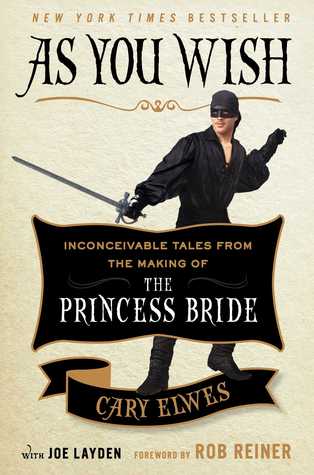
 by Cary Elwes - Having recently read Goldman's book The Princess Bride, I thought it fitting to read Elwes's memoir about the making of the movie. This book was a delight from start to finish. Cary Elwes shares stories both humorous and poignant about the experience, from his reaction to hearing that he was being considered for the part of Westley, through the final day of filming. He gives glimpses into the personalities of the other actors, and his affection and admiration for the entire cast and crew is evident throughout. Director Rob Reiner, Assistant Director Andy Scheinman, author William Goldman, and many of the actors contributed some of their own thoughts and memories, which are included in sidebars throughout the book.




 by George Bryan Polivka - I first read the Trophy Chase Trilogy several years ago, and I enjoyed it just as much this time around - probably the third time I've read it. The story has elements of fantasy and adventure, and the characters include pirates, swordsmen, and a warrior with a thirst for revenge.
 by Anna Elliott, 17% on my Kindle


 by William Goldman - I assume that almost everyone has seen the movie The Princess Bride by now; and if you haven't, what is wrong with you and what rock have you been living under? It's a classic and it's my favorite movie. But I hadn't read the book, and decided I needed to remedy that recently. I read this hardcover version with illustrations by Michael Manomivibul, and it delivered on all the true love and high adventure as promised.
 by Lori Copeland - I grabbed this book from the library shelf mostly because I recognized the author as one that I liked, and the description on the back cover was intriguing. The story is set in 1873 Michigan, at a logging camp. Tess Wakefield has inherited the logging operation from her grandfather, but knows little about it and has decided to sell. Unfortunately, the potential buyer has plans to clean-cut the whole area with no regard for replanting or the future of the business, and Wakefield Timber's foreman, Jake Lannigan, cannot convince Tess through the business letters they've exchanged to stop the sale. On her way to the camp, Tess is involved in a terrible wagon accident that takes the lives of the other passengers, and causes her to lose her memory. She is brought to the logging camp, but it's assumed that she is the teacher that was arriving on the same train. Jake begins to suspect that she may actually be the spoiled heiress he is so angry with, but decides to continue on as if she is the teacher, reasoning that if she is who he thinks, this is his chance to show her that she has a responsibility to the future of the logging industry. And then, of course, there is the growing attraction and affection between them, and the possibility that Jake's deception may ruin their future together.
 by George Bryan Polivka, page 250